Playing with Diaper Boxes to Encourage Early Speech and Language Skills

Never let a good box go to waste!

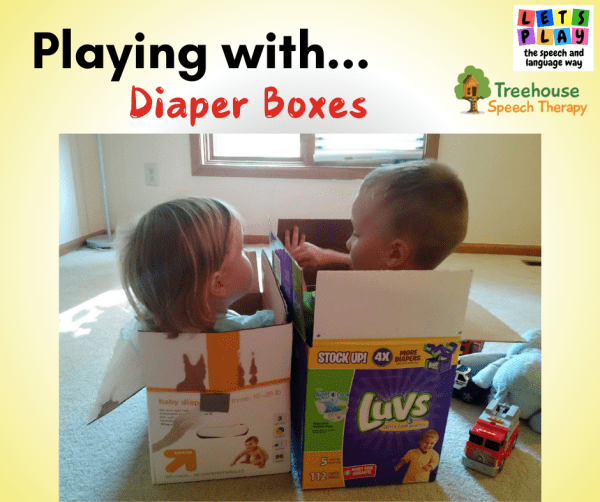
My kids colored and decorated these old diaper boxes with stickers. Then they talked about where they were going and sang “Row Row Row Your Boat”. (Proud mom moment as they did this all on their own!)

I’m sharing play ideas because PLAY IS COMMUNICATION and it’s your child’s favorite form of communication.

Don’t throw those diaper boxes out… let your toddler push it around “push”, collect things in it “in”, or play hide n seek in it “peek-a-boo”!

Remember to flip it over also! That slit in the bottom of every diaper box is an instant mailbox! Slide in pieces of paper, pictures cut out from magazines, sturdy flashcards, or large plastic coins. Say “bye bye” to all of the disappearing items.

Large boxes can be houses, trucks, cars, shopping carts, dump trucks, mail trucks, boats, airplanes, etc. etc. Just give it to your child and watch the magic happen – the possibilities are endless.

The need to fill up boxes and dump them out can be a strong desire for toddlers.  Use that as your opportunity to pair tossing toys into a box (like basketball) with a “Clean Up” song!  Teaching them to put toys away in a song or as a game may be helpful in the future.

Target practice or just feel the need to throw/kick stuff?  An empty box makes a wonderful hoop or goal!  “SCOOOOOOORE!”

Cut the box open, lay it flat and now you have a large painting surface – get out the finger paint or paint brushes!

Follow your child’s lead and use simple language (2-3 word phrases) and meaningful sounds to encourage their creativity and play ideas.
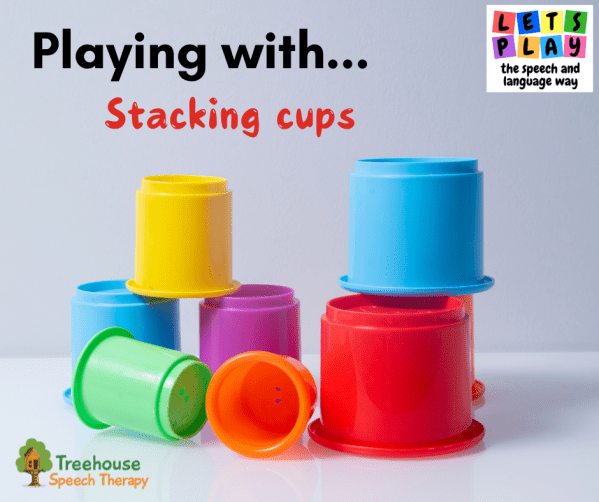
Playing with Stacking Cups to Encourage Early Speech and Language Skills

Here’s a basic toy that most children have seen and most adults played with as children.  We all know you are supposed to make a tower (stack) and then place the cups back inside (nest) to clean up. When playing this way, try some of these words/phrases…

Up
On
In
Uh-oh
More
Crash!
Ka-boom!
Fall down!

What if your child doesn’t want to stack or isn’t interested in stacking?  Here are some other ideas:

1. Make animal noises or other loud sounds into the cups like a microphone.  The amplified sound is fun to listen to and your toddler may want to do it again and again.
2. Take them to the bath and pour water onto body parts or other toys.  Name what is getting washed/splashed. Tap them together to the beat of your favorite bathtime song.
3. Fill the cups with smaller toys (shapes, puzzles pieces, balls) and shake them to make lots of noise. Name the game “shake shake” and play with “GO… STOP!”
4. Put a cup on your head like a hat then say a two-part word to make it fall off. “Up” (cup on head) and “down” (lean forward for it to fall off).  “Achoo” and “uh-oh” also work well.
5. Get out some spoons, turn the cups over, and play the drums: “bang, bang, tap, tap”

How does your toddler play with cups?

PLAY with Funny Bunny

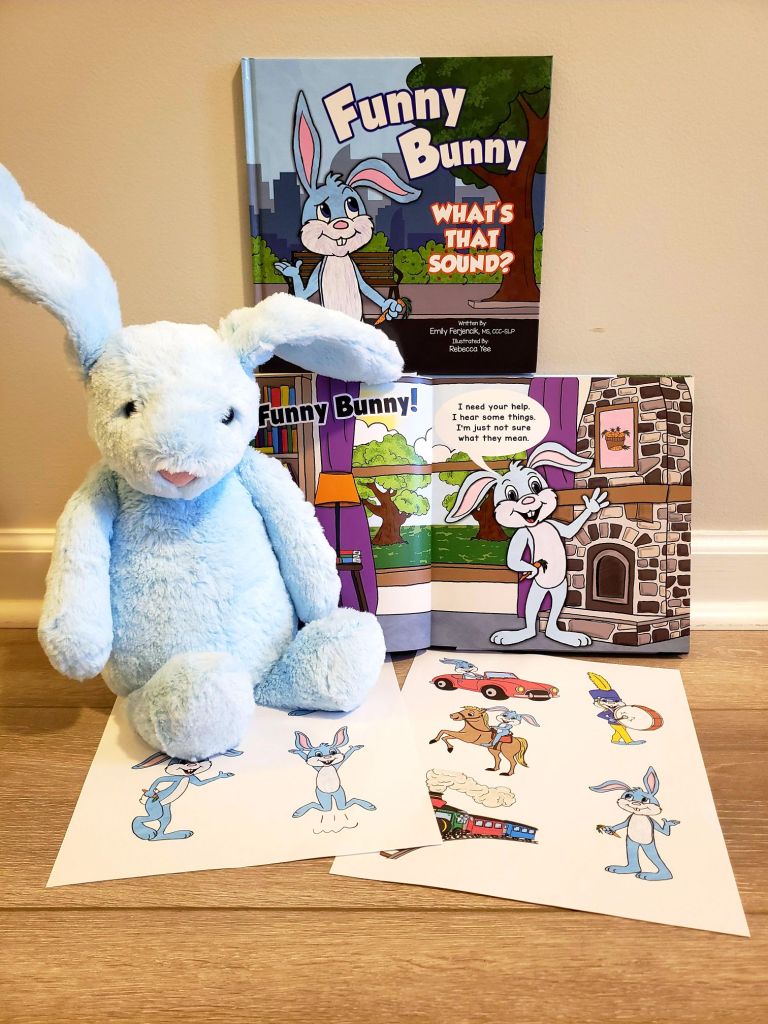
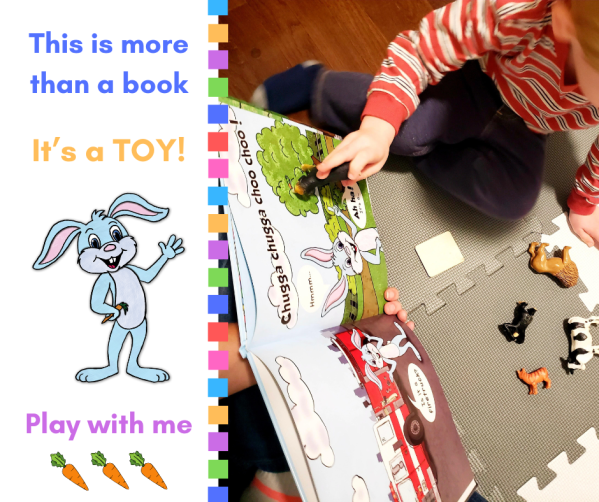
Funny Bunny was written to be interactive! At the end of the book, there are tips included for expanding play and interaction while reading the story. Additionally, you can now receive printable SOUND CARDS with your purchase. These are colorful Funny Bunny poses and illustrations found in the story which you can print out to use however you’d like. Here are just some suggestions:

Puppet not included, but using any plush bunny can be a fun extension of play and sound making!

This is the Moment

DO NOT LET THIS MOMENT PASS

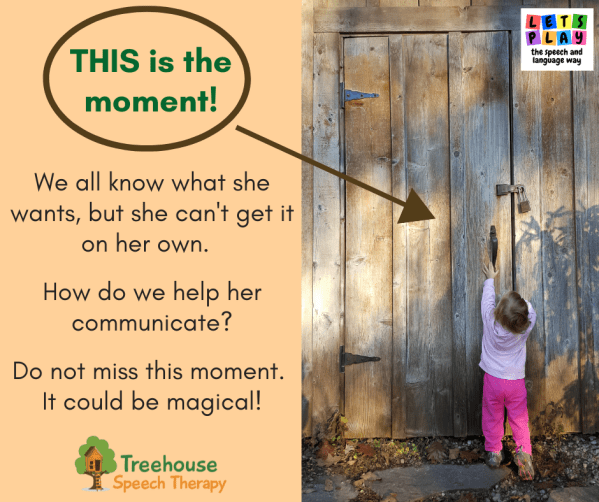
You know what your little one wants.  Everyone knows it.  It’s obvious she’s pointing to something or reaching for something or staring at something.  However, she hasn’t started talking yet or, at least, she doesn’t yet know THAT word.  What do you do to help HER learn to tell YOU what she wants?

Let’s just use the photo above for our example.  She wants to reach that door handle.  She can’t.  She needs our help.  Here are some choices:

  • Open it for her.
  • Respond: “Do you want me to open it?  Say ‘open’.”
  • Kneel next to her and pretend you can’t reach either then grunt “uh, it’s too high”.  Grunt some more while pretending to reach. 
  • Stand next to her and knock.  “Knock knock”.
  • Get down to eye level and ask “open?”  Wait for eye contact, a head nod, a smile, or some indication that means yes, then point to your mouth and say “OOOOpen”.
  • Approach her and ask “do you want to close it or OPEN it?”

Any of these responses could get the job done, but depending on your child’s abilities, you may want to try a variety of these to see which option gets the better communication result.  Maybe you want to focus on social interaction, maybe answering yes/no questions is the target, maybe the goal is imitating sounds (“knock”), or maybe the goal is attempting a new word.

The key to these all-important moments is that you have to capitalize on that sweet spot between knowing what the request is, but BEFORE your toddler starts to get upset or frustrated.  If you find the magical moment and use the strategy the best fits your child’s abilities, you are much more likely to see results.

Name That Game

What do you and your toddler like to do together? How does he let you know he wants you to do it again or do more of it? If the game he loves to play doesn’t have a name, how do you know he wants to be thrown in the air or tickled or be dinosaurs together?  Is there a gesture?  A sound?  When a little one is learning to talk we need to make sure we are naming all kinds of things – even things that don’t seem to have a name – so that he can ask for it again.

When we blow bubbles or sing songs there are natural stopping points in the activity so we can ask “do you want more?”. That’s an obvious question to ask once we are already involved in the activity. But how does your toddler request something on his own? Well, he may know that he can ask for “bubbles” or the “bus” song because he has heard those names before. What about activities like run in a circle and then crash on top of Daddy? How about the swing-me-in-the-air game? Even games that you make up need to have names. Otherwise, your little one won’t know how to request it and you might be in for a surprise when he just starts climbing all over you trying to play the touch-mommy’s-nose game you played yesterday but then forgot all about.

So, if you and your little one like to play games that you invent – PERFECT! Just give it a simple name so that he can ask you again, on his own, or so that you can offer it as a choice later.

Do you want to play “tickle” or “wheeee” or “nose”?

Blog at WordPress.com.

Up ↑